



Kimchi Fried Rice with Fully Cooked Eggs
Tangy kimchi and gochujang turn chilled rice into a colorful skillet meal. A fully cooked egg on each serving adds richness without a runny yolk.
Estimated total: About 35 minutes for one batch; allow extra time for two batches. Rice cooking and chilling are not included
Prep: 15 minutes · Cook: 20 minutes
Additional time / overlap: None with safely chilled cooked rice
PREP
15 minutes (estimated)
DISH TYPE
Main Dish
SERVES
4
CUISINE
Korean
DIFFICULTY
Easy
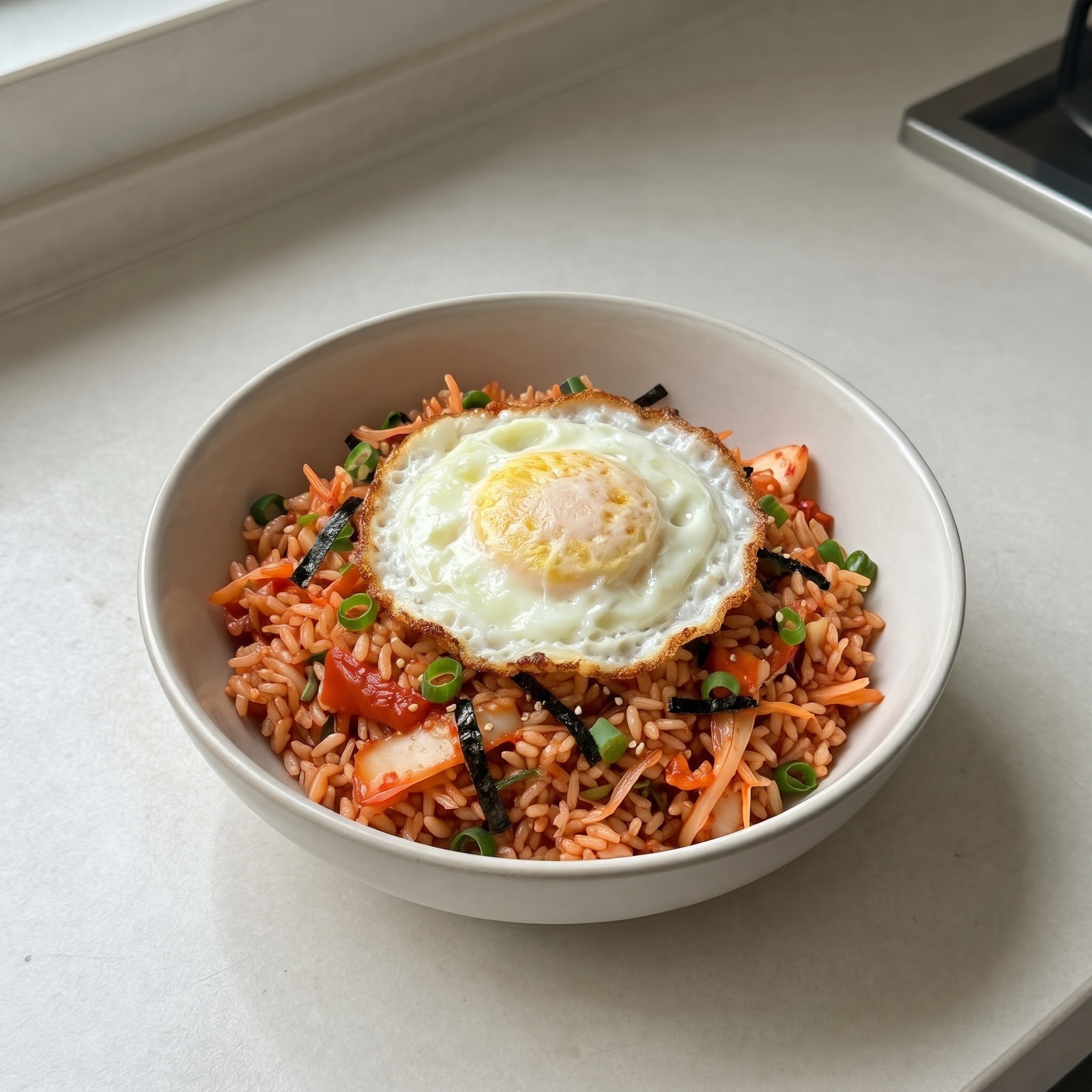
Tangy kimchi and gochujang turn chilled rice into a colorful skillet meal. A fully cooked egg on each serving adds richness without a runny yolk.
Estimated total: About 35 minutes for one batch; allow extra time for two batches. Rice cooking and chilling are not included
Prep: 15 minutes · Cook: 20 minutes
Additional time / overlap: None with safely chilled cooked rice
PREP
15 minutes (estimated)
DISH TYPE
Main Dish
SERVES
4
CUISINE
Korean
DIFFICULTY
Easy
PRODUCT INGREDIENTS
Fried rice
- 4 cups cold cooked short-grain rice, clumps loosened
- 2 cups chopped napa cabbage kimchi, drained; reserve ¼ cup brine
- 1 small yellow onion, finely diced
- 2 garlic cloves, minced
- 3 scallions, thinly sliced, whites and greens separated
- 2 tablespoons gochujang
- 1 tablespoon reduced-sodium soy sauce
- 1 teaspoon sugar
- 2 tablespoons neutral oil
- 2 teaspoons toasted sesame oil
Eggs and garnish
- 4 large eggs
- 2 teaspoons neutral oil
- 2 tablespoons water
- 1 teaspoon toasted sesame seeds
- 1 sheet roasted unseasoned nori, cut into thin strips
DIRECTIONS
Timing
Serves: 4. Estimated prep: 15 minutes. Estimated cook: 20 minutes. Additional time: None with safely chilled cooked rice. Estimated total: About 35 minutes for one batch; allow extra time for two batches. Rice cooking and chilling are not included. Times are estimates.
Equipment
Large nonstick skillet or wok, second skillet with lid, spatula, food thermometer
Method
- Use rice that was cooled quickly, ideally within 1 hour of cooking, refrigerated promptly and kept no more than 24 hours. Keep it cold while preparing the other ingredients. Stir the kimchi brine, gochujang, soy sauce and sugar together.
- If your skillet cannot comfortably hold all the rice and kimchi, divide the rice-mixture ingredients into two equal batches before starting, including the 2 tablespoons oil, onion, garlic, scallion whites and greens, kimchi, brine mixture and sesame oil. Cook each batch through the next two steps; allow extra cooking time. Heat the 2 tablespoons oil in a large skillet over medium-high heat (use half for each of two batches). Cook the onion and scallion whites for 3 minutes. Add garlic and kimchi; stir-fry for 4–5 minutes until the kimchi softens and most loose moisture has evaporated.
- Add the rice and brine mixture. Break up clumps with a spatula and stir-fry for 5–7 minutes, until evenly colored and heated to 165°F throughout. Take off the heat and fold in the sesame oil and scallion greens.
- Meanwhile, heat 2 teaspoons oil in a second skillet over medium heat. Crack in the eggs, keeping them separate. Cook for 1 minute, then carefully add 2 tablespoons water at the pan edge and cover. Reduce heat to medium-low and cook another 4–6 minutes, until both the whites and yolks are firm; allow longer if needed. Do not serve runny eggs for this version.
- Divide the hot fried rice among four bowls. Add one fully cooked egg to each, then scatter with the sesame seeds and nori strips. Serve immediately.
Options: For a meat-free version, choose kimchi without fish sauce or shrimp. For a vegan version, also omit the eggs and their cooking oil and water; serve with separately cooked tofu if desired.
Allergens: Egg, soy, sesame and usually wheat; kimchi may contain fish or crustacean shellfish. Check nori and condiment labels.
Storage: This recipe reheats previously cooked rice. Make only what you will eat; do not cool and reheat it again. Discard rice left at room temperature more than 2 hours (1 hour above 90°F). Reheating does not rescue improperly stored rice.
BUY ONCE. MAKE MORE MEALS
Shop noodles, rice, sauces, snacks, produce, frozen foods, hot pot ingredients, kitchenware, and pantry staples from across Asia at our Minneapolis and Woodbury stores.
SAVE MONEY
WASTE LESS
COOK MORE
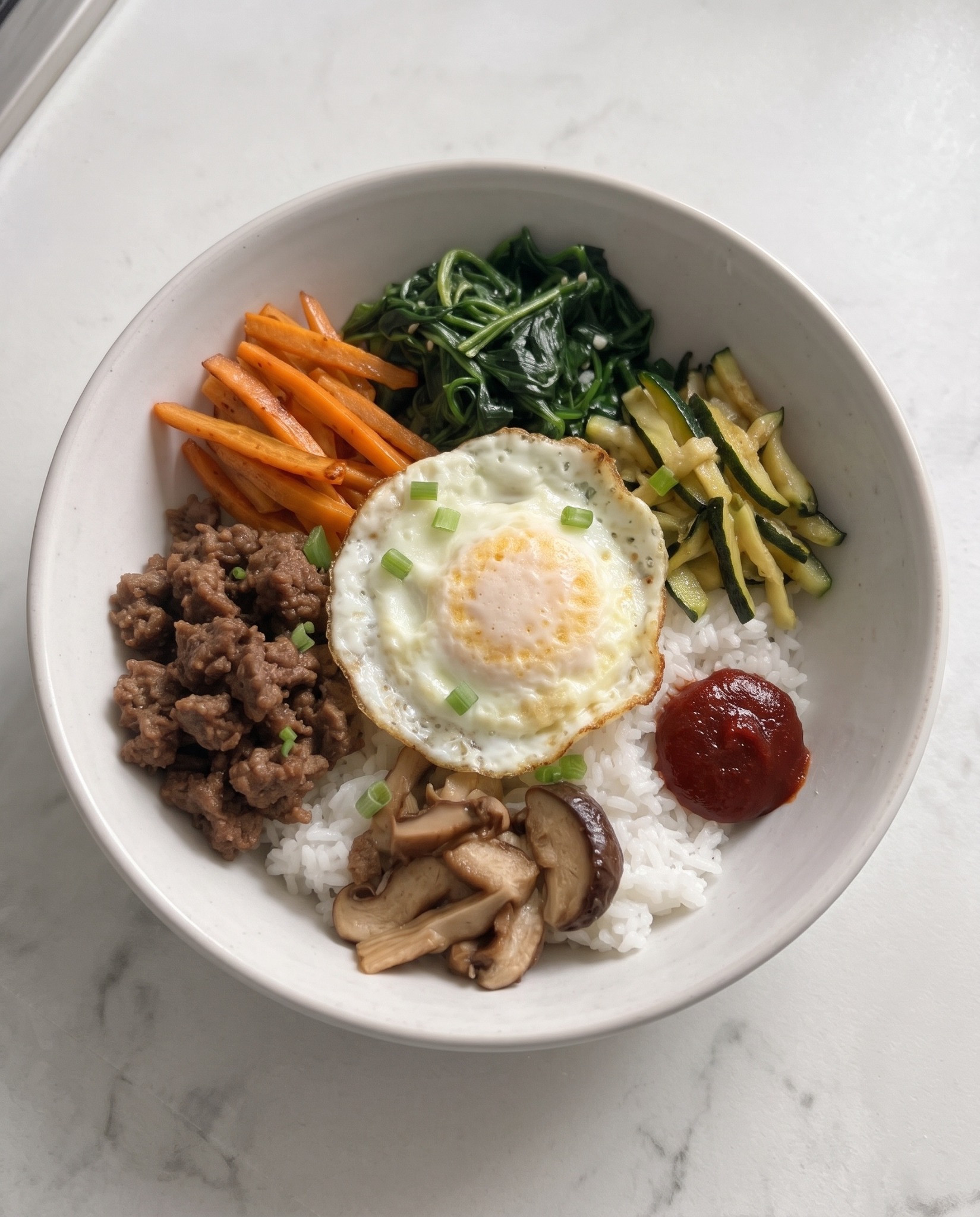
Bibimbap: Korean Rice Bowls with Beef and Vegetables
Bibimbap means “mixed rice.” Arrange the toppings over your rice, add a little sauce, then mix everything together before you eat. This home-style version combines savory ground beef, spinach, carrots, zucchini, and mushrooms with a fried egg and a spicy-sweet gochujang sauce. The vegetables cook separately so each keeps its own texture. You can use an ordinary serving bowl; this recipe does not require a hot stone bowl.
Estimated total: About 60–75 minutes
Prep: About 25 minutes · Cook: About 35–50 minutes
Additional time / overlap: 15 minutes refrigerated marinating overlaps preparation; rice cooks alongside toppings. Two egg batches or a longer rice cycle may add time.
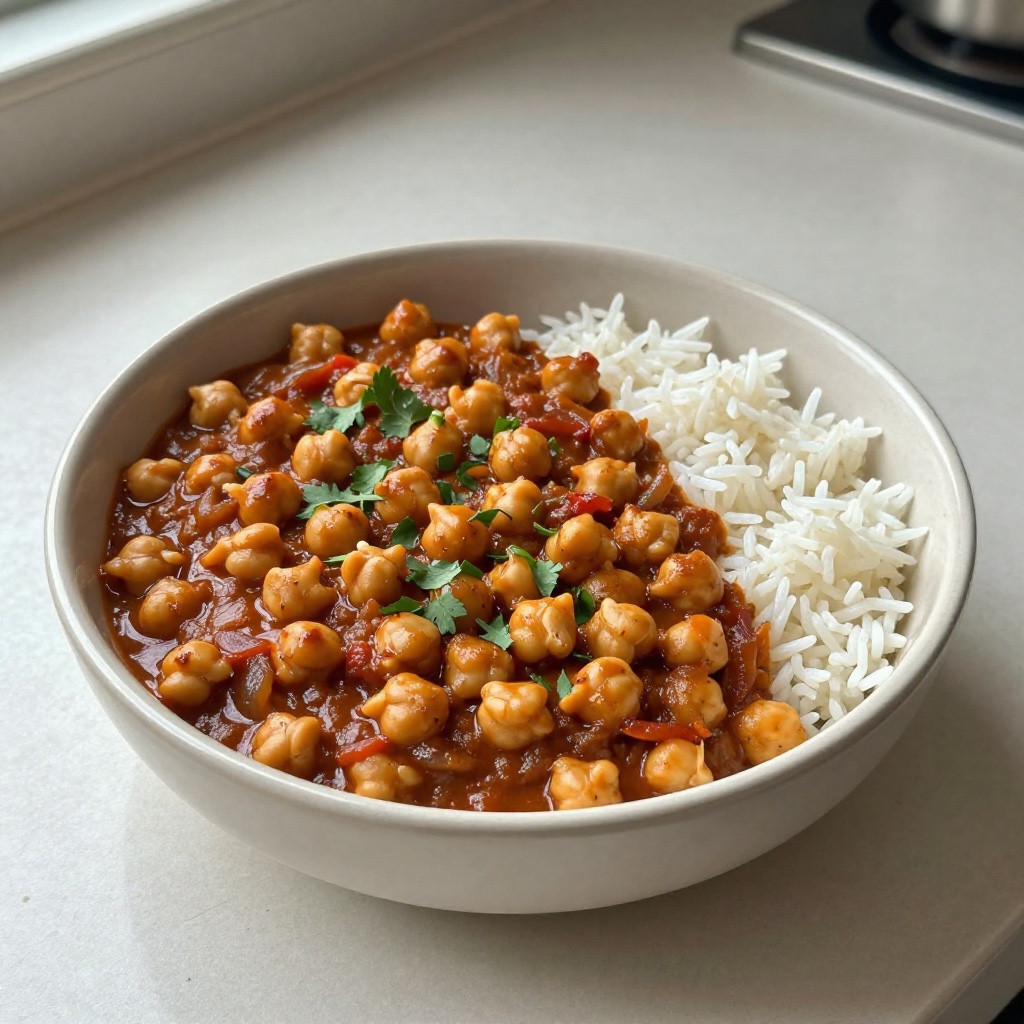
Chana Masala with Canned Chickpeas
Chickpeas simmer in an onion-tomato masala scented with cumin, coriander and ginger. Canned chickpeas keep this stovetop version practical, while a little amchur adds a pleasantly tart finish.
Estimated total: 50 minutes
Prep: 15 minutes · Cook: 35 minutes